

Debunking AI Misconceptions: Why We're Being Misled and How to Harness AI's True Potential
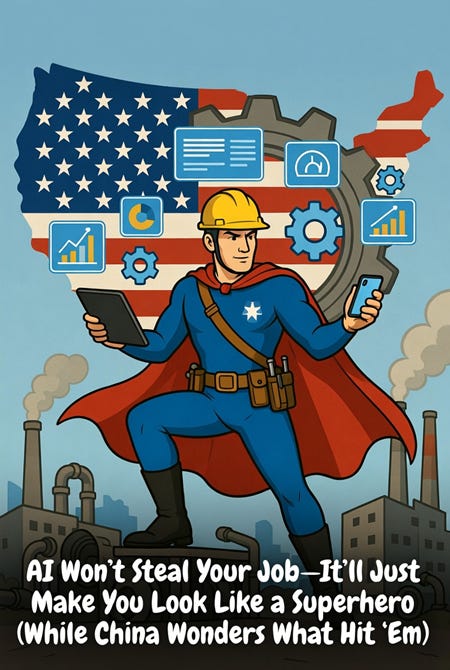
AI Won't Steal Your Job—It'll Just Make You Look Like a Superhero (While China Wonders What Hit 'Em)

In a world buzzing with hype and fearmongering about artificial intelligence, it’s easy to get swept up in the narrative that AI is some unstoppable monster poised to steal jobs or even end humanity. But according to Palantir CTO Shyam Sankar, this couldn’t be further from the truth. In his recent opinion piece, Sankar argues that the American people are being lied to about AI, painting it as an inevitable force rather than a tool shaped by human choices. Drawing from his insights, let’s unpack some of the biggest misconceptions about AI and explore a more grounded, empowering perspective.
Misconception 1: AI Is an Inevitable Destroyer of Jobs and Humanity
One of the most pervasive myths is that AI will automatically wipe out jobs or lead us straight to extinction, as if it’s a force of nature beyond our control. This doomsday rhetoric ignores the crucial role of human agency—we’re the ones building, deploying, and deciding how AI is used. Instead of viewing AI as a job killer, Sankar emphasizes that it’s people who choose whether to use it to eliminate positions or to amplify human capabilities.
Real-world examples tell a different story. In manufacturing, AI has enabled maritime companies to open a third shift, creating more opportunities rather than fewer. Similarly, in healthcare, ICU nurses are using AI to surface critical data quickly, freeing them up to spend more time at patients’ bedsides. Far from destroying jobs, AI can deliver massive productivity boosts—up to 50 times in some cases—turning workers into superheroes who produce more value.
Misconception 2: AI Will Erode Privacy and Civil Liberties Without Question
Another common fear is that AI inevitably leads to a dystopian surveillance state, stripping away our freedoms in the name of progress. But this overlooks the fact that AI’s impact on privacy and liberties depends entirely on how we design and implement it. Apocalyptic prophecies and utopian fantasies distract from the reality: humans wield AI to either protect or undermine these values.
Sankar points out that when built thoughtfully—by a diverse group including veterans, blue-collar workers, and everyday Americans—AI can enhance safety and prosperity without compromising rights. The key is focusing on empowerment rather than top-down control, ensuring AI serves people, not the other way around.
Misconception 3: AI Is Just for Tech Elites, Not Everyday Workers
There’s a notion that AI is an elite tool, accessible only to coders in Silicon Valley, leaving the average worker behind. This couldn’t be more wrong. Sankar likens AI to the printing press, a democratizing force that puts knowledge and power in everyone’s hands. He advocates for treating AI as an “American birthright,” with training that doesn’t require programming skills but focuses on practical application, like improving clinical judgment for nurses or engineering tasks for technicians.
In the context of global competition, this is crucial. U.S. manufacturing productivity growth lags at 0.4%, compared to China’s 6%. By equipping workers—from electrical engineers in Georgia to nurses in Tampa—with world-class AI tools, we can close that gap and rebuild our industrial base.
The Bigger Picture: AI in National Security and Economic Revival
Beyond debunking myths, Sankar stresses AI’s vital role in national security and outpacing adversaries like China. It’s not just about tech—it’s about reindustrialization and deterrence. By giving American workers “superpowers,” AI can erode China’s advantages and foster a safer, more prosperous nation.
To make this happen, we need to:
Ensure productivity gains translate to better pay and equity for workers.
Let frontline users shape AI, drawing inspiration from models like Toyota’s worker-driven innovation.
Use AI to cut bureaucracy, not add more red tape.
Prioritize development for American industry to achieve tangible results.
Conclusion: Time to Reclaim the AI Narrative
The lies about AI aren’t just harmless hype—they’re holding us back from realizing its full potential. By shifting focus from fear to empowerment, we can harness AI to boost productivity, strengthen national security, and create a brighter future for all Americans. As Sankar urges, it’s time to provide every worker with the tools they need and let human ingenuity lead the way. Let’s stop buying into the misconceptions and start building the AI-powered America we deserve.