

Security Check-in Quick Hits: Centralized Vaults, Breach Brokers, and Medical Leaks
For January 1, 2026

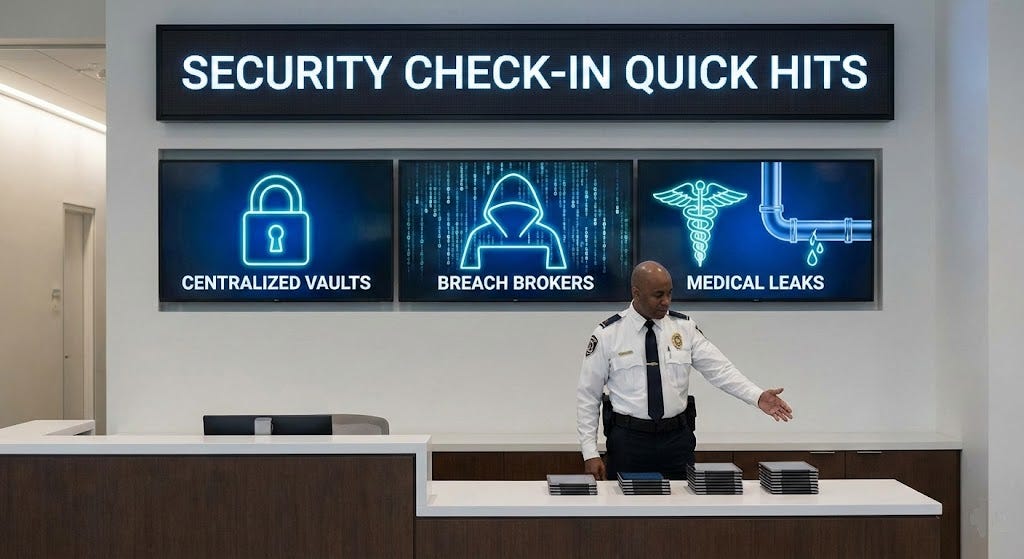
The Perils of Centralized Identity Databases: A Hacker’s Paradise
In the ever-evolving landscape of cybersecurity, one persistent vulnerability stands out: centralized identity databases. These massive repositories, housing sensitive personal documents and information, essentially act as irresistible targets for cybercriminals. Imagine a museum filled with priceless artifacts, but instead of art, it’s your Social Security number, passport details, and medical records—all under one digital roof. A single successful breach can expose millions, leading to identity theft, financial fraud, and long-term privacy nightmares.
Recent discussions on X highlight this issue vividly. Experts point out that traditional architectures create “honey pots” that hackers can’t resist. The problem isn’t just theoretical; we’ve seen countless high-profile breaches where centralized systems failed spectacularly, from Equifax to Yahoo. The core flaw? Centralization concentrates risk. If the vault is cracked, everything inside is compromised.
But there’s hope on the horizon. Decentralized alternatives, like those championed by projects such as idOS_network, shift the paradigm. Here, data remains at the “edge”—controlled by the user rather than a single entity. No central vault means no grand heist. This approach uses blockchain-inspired tech to ensure personal info isn’t a liability for platforms. Implementing such systems requires rethinking data architecture, but the payoff is immense: enhanced security, user empowerment, and fewer breach headlines.
As we kick off 2026, it’s time for organizations to ditch the outdated model. Policymakers should incentivize decentralization through regulations, and individuals can advocate for privacy-first services. In a world where data is the new oil, let’s stop storing it in leaky tanks. Stay vigilant—your identity depends on it.
Data Brokers and the Underground Trade in Breached Information
The shadowy world of data brokers has long been a thorn in cybersecurity’s side, but a growing concern is their role in peddling raw data from breaches. Unlike legitimate public records aggregators (think Whitepages), some platforms like IntelX allegedly offer access to stolen datasets—hacked emails, passwords, and personal details that were never meant to be public. This isn’t just data collection; it’s the commercialization of crime, enabling doxxing, phishing, and further exploitation.
Conversations buzzing on X underscore the distinction: breached data isn’t “public record”—it’s pilfered property being resold. Cybercriminals thrive on this ecosystem, where a single leak can fuel an underground economy worth billions. The Equifax breach of 2017, for instance, saw compromised data surfacing on dark web markets years later, leading to widespread identity fraud.
Why does this persist? Lax regulations and the blurred lines between legal data aggregation and illicit trading. Brokers often hide behind “intelligence” labels, but the end result is the same: your stolen info becomes a commodity. To combat this, we need stricter laws banning the sale of breach-derived data, enhanced monitoring of broker activities, and international cooperation to shut down these marketplaces.
For individuals, the advice is clear: use strong, unique passwords, enable two-factor authentication, and monitor your digital footprint with tools like Have I Been Pwned. Companies must prioritize breach prevention and transparent reporting. As 2026 unfolds, let’s push for accountability—data brokers shouldn’t profit from our misfortunes. Knowledge is power; arm yourself against this hidden threat.
The ManageMyHealth Breach: A Wake-Up Call for Medical Data Security
Medical data breaches are among the most alarming cybersecurity issues, striking at the heart of personal privacy and health. The recent ManageMyHealth incident in New Zealand exemplifies this, potentially affecting up to 126,000 users. Victims may soon learn if their private medical information—appointments, prescriptions, test results—has been compromised, adding stress to an already vulnerable population.
Reports from X detail the unfolding crisis, with notifications expected within 48 hours. This isn’t isolated; healthcare systems worldwide are prime targets due to the high value of medical data on black markets—used for insurance fraud, blackmail, or even targeted scams. The 2023 UnitedHealth breach in the US, impacting millions, showed how one vulnerability can cascade into chaos, disrupting services and eroding trust.
Root causes often include outdated software, insider threats, or phishing attacks. In ManageMyHealth’s case, details are emerging, but the scale underscores the need for robust defenses like encryption, regular audits, and zero-trust architectures. Governments must enforce stringent data protection laws, such as GDPR equivalents, with hefty fines for non-compliance.
For users, proactive steps include reviewing accounts for unusual activity, freezing credit if needed, and advocating for better security from providers. Healthcare orgs should invest in AI-driven threat detection and employee training. As we enter 2026, this breach reminds us: health data isn’t just information—it’s intimately personal. Let’s demand better safeguards to prevent the next headline from being about you.