


Russian Intelligence Continues Aggressive Phishing Against Encrypted Messaging Apps (Signal and Similar)
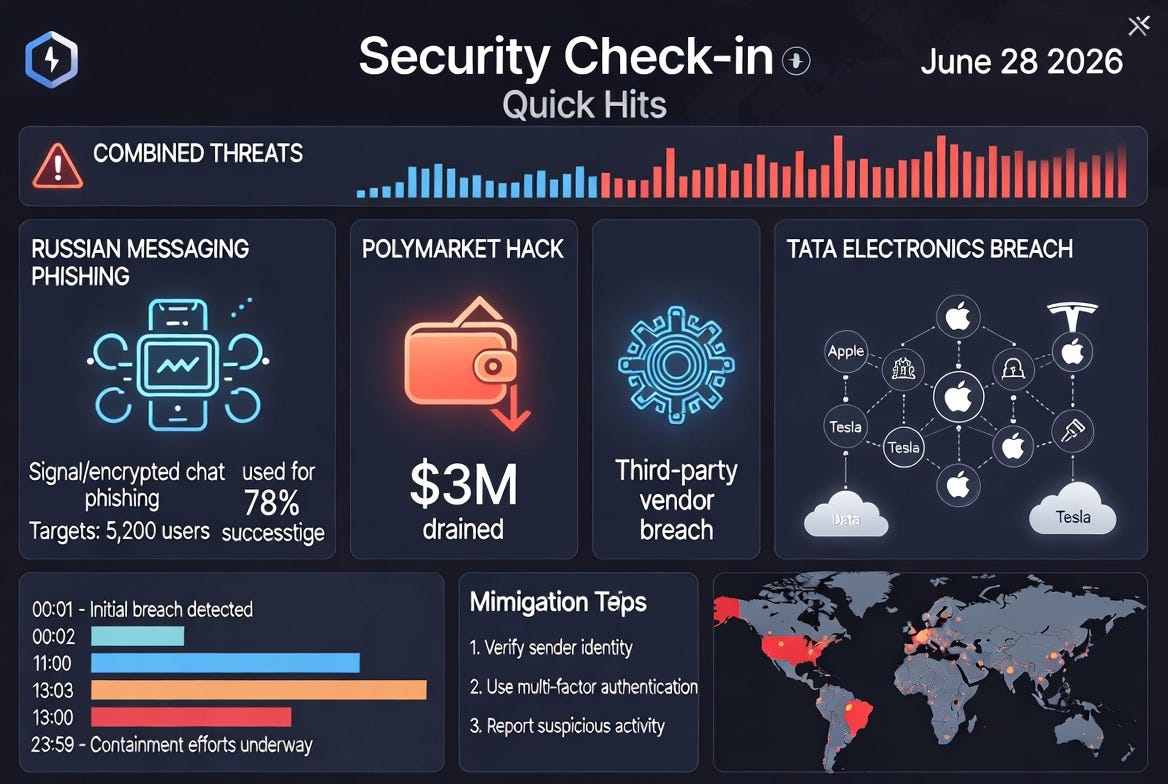
Russian-linked threat actors are actively targeting users of commercial messaging applications like Signal through sophisticated social engineering. According to recent alerts and reports, attackers impersonate official support accounts or send fake recovery-related messages to trick victims into revealing backup keys, PINs, or other credentials.
This campaign focuses on high-value targets such as government officials, military personnel, journalists, and others with intelligence value. Once access is gained, actors can read messages, view contacts, and launch further phishing from trusted accounts. Encryption itself isn’t broken—it’s credential theft and session hijacking at play. FBI and CISA warnings emphasize vigilance with recovery options and avoiding unsolicited “support” interactions.
Key Takeaway for Defenders: Enable strong device-level protections, avoid sharing recovery codes, and verify support requests through official channels. Organizations should train employees on these evolving social engineering tactics, as they bypass technical controls.
Polymarket Hack: $3M+ Stolen via Third-Party Vendor Compromise and Malicious Code Injection
Prediction market platform Polymarket disclosed a breach where hackers compromised a third-party vendor, injected malicious code into the website for some users, and drained approximately $3 million (updated reports around $3.1M) in pUSD (USDC-backed) from at least 11 user wallets. Funds were swapped and moved to Ethereum.
The platform has contained the incident, promised full refunds to affected users, and is notifying victims. This incident highlights the dangers of supply-chain vulnerabilities in web frontends and crypto platforms, where a single vendor compromise can lead to direct wallet drains via phishing-like scripts.
Key Takeaway for Defenders: Vet third-party vendors rigorously, implement strict code integrity checks (e.g., Subresource Integrity), and use wallet protections like hardware keys or transaction monitoring. Crypto users should be wary of unexpected prompts or site behaviors.
Tata Electronics Data Breach Raises Supply Chain Concerns for Apple, Tesla, and Others
Tata Electronics, a major supplier in electronics manufacturing and semiconductors (serving clients including Apple and Tesla), confirmed a cybersecurity incident involving the leak of substantial internal data (reports cite over 630GB and 200,000+ files). Hackers (linked to World Leaks) allegedly exposed component designs, specifications, and confidential documents.
While operations were reportedly unaffected, the breach underscores risks to intellectual property in global supply chains. Apple and others are investigating. This fits a pattern of attacks on manufacturers and third-party vendors that can cascade to bigger tech ecosystems.
Key Takeaway for Defenders: Supply chain risk management is critical—conduct regular audits, segment sensitive data, and monitor for exfiltration. Enterprises reliant on complex vendor networks should prioritize zero-trust principles and incident response planning for IP theft.
These incidents in the last day or so reinforce ongoing trends: state-sponsored espionage via social engineering, rapid exploitation of supply-chain weaknesses, and the high cost of third-party risks in both crypto and hardware sectors. Stay patched, verify everything, and monitor vendor ecosystems closely.