


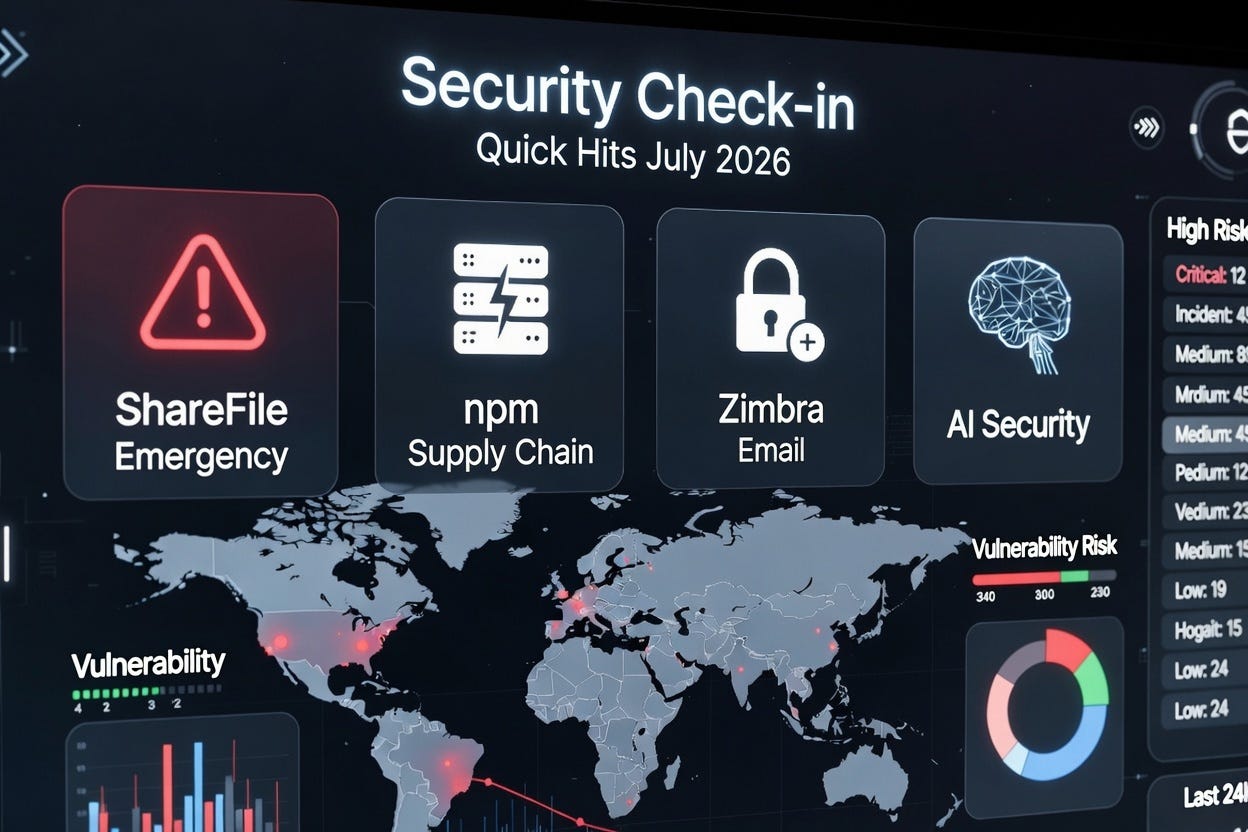
Progress ShareFile Storage Zone Controllers Face Credible Threat – Emergency Shutdown Ordered
In a significant alert issued around July 10, 2026, Progress Software instructed all customers running on-premises ShareFile Storage Zone Controllers to immediately shut down the associated Windows servers. This response addresses a “credible external security threat,” with no immediate patch available. Customers were urged to take this drastic step to safeguard data, and Progress temporarily disabled access to connected accounts.
Key Details and Implications: Storage Zone Controllers enable organizations to manage files on their own infrastructure while using ShareFile’s interface. The pre-authentication risks (linked to earlier CVEs like those in the 2026 disclosures) highlight vulnerabilities in file-sharing solutions. Organizations must monitor status updates closely and consider migrating to cloud-only configurations where possible. This incident underscores the persistent dangers in hybrid/cloud-adjacent storage systems.
Lessons for Defenders: Prioritize vendor alerts, maintain offline backups, and test incident response plans for rapid isolation. Review third-party file sync tools for similar exposure.
Ongoing npm Supply Chain Malware Campaigns
Supply chain attacks via npm packages continue to pose a major risk, with malicious insertions compromising developer workflows and downstream applications. Recent discussions and historical patterns (e.g., compromised popular packages) show attackers injecting stealers, drainers, or backdoors through dependency updates.
Why It Matters: npm’s vast ecosystem means one tainted package can affect thousands of projects. Tactics include typosquatting, maintainer account takeovers, or automated injection. Enterprises building AI/ML tools or web apps are particularly exposed.
Mitigation Steps:
Use tools like npm audit, lockfiles, and signed packages.
Implement dependency scanning in CI/CD.
Adopt allowlisting and SBOM (Software Bill of Materials) practices.
Monitor for unusual behavior in build environments.
This remains a top daily concern for DevSecOps teams.
Zimbra Email Server Exploits in the Wild
Zimbra Collaboration servers face repeated exploitation of critical vulnerabilities, including command injection (e.g., CVE-2024-45519 and successors) allowing unauthenticated remote code execution via crafted emails. Mass exploitation campaigns have been observed, leading to webshell deployment and full server compromise.
Impact: Email systems are high-value targets for initial access, credential theft, and lateral movement. Organizations in government, education, and enterprise sectors using Zimbra are at elevated risk.
Recommendations:
Apply the latest patches immediately.
Monitor for anomalous SMTP traffic and webshells.
Consider segmentation or migration to more hardened alternatives if feasible.
Enable strict email filtering and multi-factor protections.
Ongoing activity makes this a persistent “issue of the day” for mail admins.
AI Model Security and Trust Boundaries Under Scrutiny
Microsoft CEO Satya Nadella highlighted concerns around AI model distillation and urged enterprises to establish their own secure boundaries rather than relying on rivals’ rules. This ties into broader 2026 trends: increased AI-enabled attacks, supply-chain compromises in ML tools, and adversarial use of generative AI.
Broader Context: Threat actors leverage AI for phishing, payload generation, and evasion. Reports show rising zero-days and cloud intrusions. Defenders must focus on data poisoning prevention, model integrity, and secure inference environments.
Action Items:
Inventory AI/ML dependencies and implement isolation.
Train teams on prompt injection and adversarial ML risks.
Adopt frameworks for trustworthy AI development.
Monitor for distillation attacks that extract proprietary model capabilities.
These interconnected issues reflect the evolving threat landscape—supply chain, email vectors, file services, and AI acceleration demand vigilant, layered defenses. Stay patched, monitor vendor channels, and prioritize proactive hunting.