


Tata Electronics Cyberattack and Data Leak (Supply Chain/Apple-Tesla Impact)
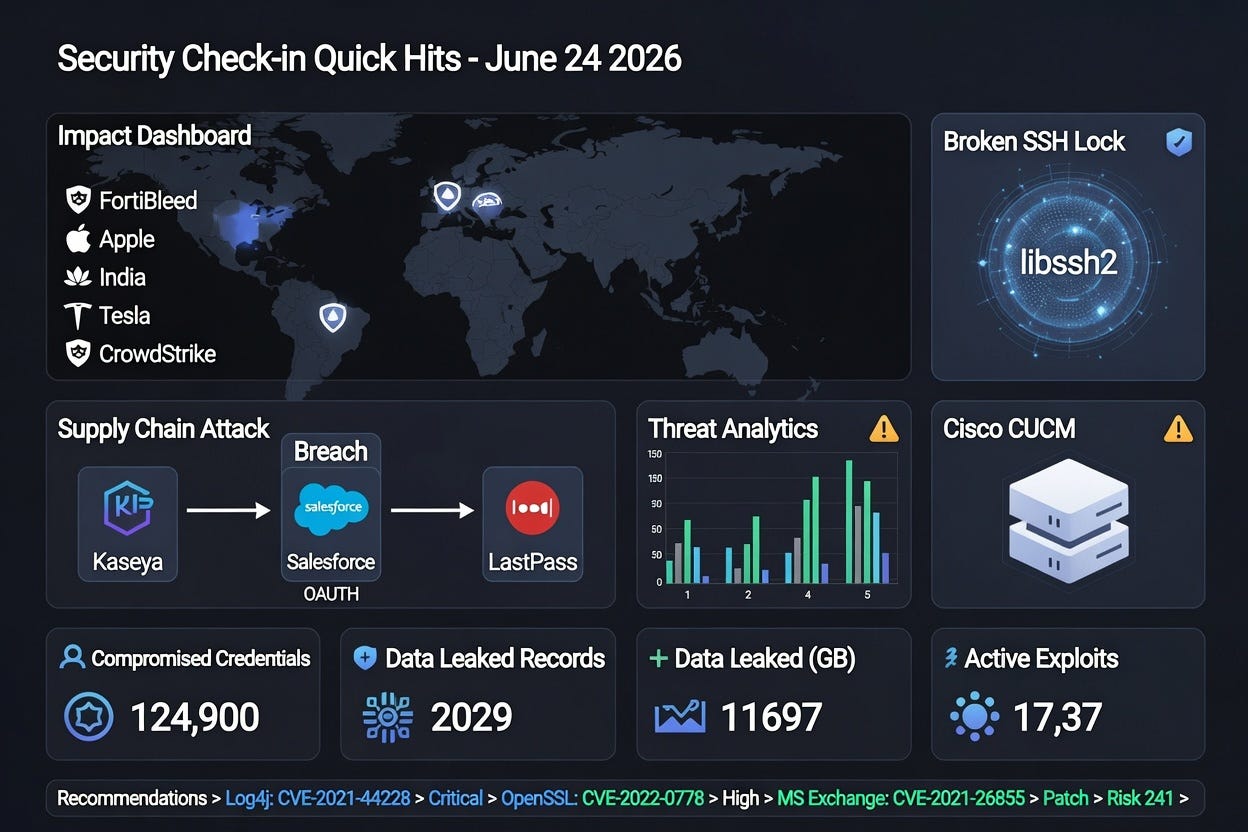
Tata Electronics, a major supplier for Apple and Tesla in India, confirmed a cybersecurity incident after the ransomware group World Leaks posted over 200,000 files (exceeding 600GB) allegedly containing component designs, specifications, employee passports, and trade secrets on the dark web.
The company stated the breach occurred a few weeks ago, response protocols were activated immediately, and operations remain unaffected. However, the leaked data includes sensitive Apple circuit board details and Tesla chargeport controller information marked as trade secrets. This highlights ongoing risks to manufacturing supply chains, especially those tied to high-profile tech giants. Organizations should review third-party vendor risks, enforce strict data segmentation, and monitor for extortion follow-ups. Lessons: Assume supply chain partners are targets and prioritize contractual security requirements.
Klue Supply Chain Attack Impacting Salesforce and LastPass (OAuth Token Abuse)
A threat actor compromised Klue (a market intelligence platform) and stole OAuth tokens used for integrations with Salesforce and other CRMs. This enabled bulk exfiltration of customer data across hundreds of organizations, including cybersecurity firms like LastPass, Tanium, and Recorded Future.
LastPass confirmed exposure of standard CRM data (names, emails, addresses, phone numbers, support cases, and sales info) but emphasized that password vaults and core infrastructure were unaffected. Tokens have been rotated. This incident underscores the dangers of trusted third-party integrations in SaaS ecosystems—attackers abused legitimate access paths without directly breaching the victims’ primary systems.
Recommendations: Audit and limit OAuth scopes for integrations, implement just-in-time access or regular token rotation, monitor for anomalous API queries from integration accounts, and treat supply chain vendors with the same scrutiny as internal assets.
FortiBleed Campaign: Mass Credential Harvesting on Fortinet Devices
The “FortiBleed” campaign has compromised credentials for tens of thousands (estimates 73k–86k) of FortiGate firewalls and VPN gateways worldwide, spanning 194 countries. Attackers reused credentials from prior breaches, combined with brute-force and automated scanning, and used compromised devices to sniff further credentials from VPN traffic.
No new zero-day vulnerability; it’s largely a result of weak password hygiene and missing MFA on internet-facing devices. CISA and others have issued warnings. Impact: Potential initial access broker activity leading to broader network compromises.
Action items: Enable MFA everywhere, rotate credentials, restrict management interfaces, review logs for unauthorized access, upgrade to support stronger hashing, and consider removing devices from public exposure where possible.
Critical Vulnerabilities in libssh2 SSH Library
Multiple high-severity issues (e.g., CVE-2026-7598 integer overflow leading to RCE, and others like pre-auth DoS) affect the widely used libssh2 library (versions up to 1.11.1). These could allow remote code execution or denial-of-service via malicious SSH packets/servers.
Patches are available; affected software includes many embedded systems, clients, and tools relying on SSH. With millions of potential instances, this is a priority for patching, especially in developer and infrastructure environments.
Mitigation: Update libssh2 immediately, review dependencies, and consider alternatives or hardening for SSH-exposed services.
Cisco Unified CM Flaw (CVE-2026-20230) Now Actively Exploited
A high-severity SSRF vulnerability in Cisco Unified Communications Manager (WebDialer service) allows unauthenticated attackers to write files to the OS, potentially leading to root privilege escalation. Exploitation is now observed in the wild, with PoCs available.
WebDialer is disabled by default, but if enabled, it’s a significant risk for UC environments. Cisco has patched it; organizations should apply updates and disable unnecessary services.
Key takeaway across all: Supply chain risks, credential hygiene, and timely patching remain perennial top issues. AI-driven threats and integration abuses are accelerating the pace.