

Security Check-in Quick Hits: WordPress Plugin Exploit, Major Health Data Breach, and Ongoing Supply Chain Risks
For May 17, 2026

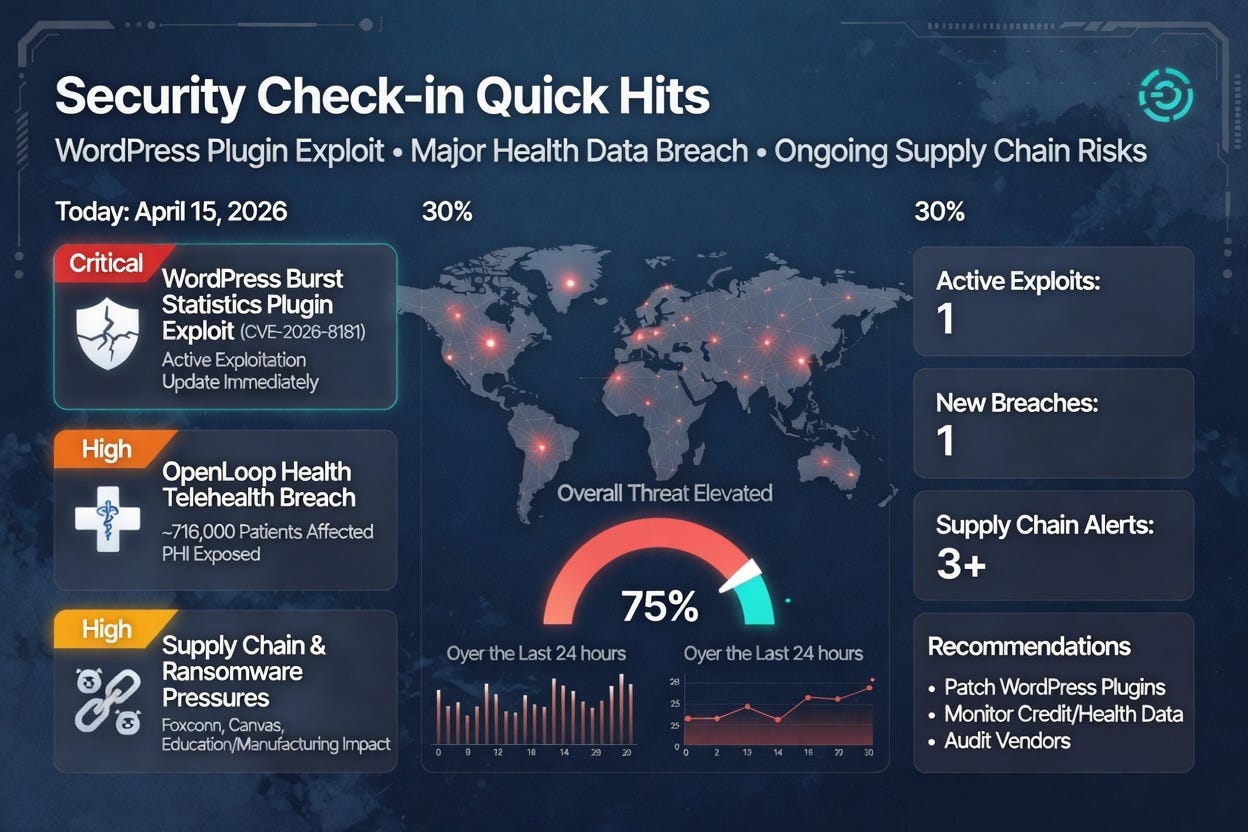
Hackers Actively Exploiting Authentication Bypass in Popular WordPress Plugin (Burst Statistics)
A critical vulnerability (CVE-2026-8181) in the Burst Statistics WordPress plugin is being actively leveraged by attackers to gain admin-level access to vulnerable websites. This authentication bypass flaw allows unauthenticated users to escalate privileges, potentially leading to full site compromise, data theft, or injection of malware.
Key Details and Implications
The plugin is used for analytics and tracking on many sites, making it a tempting target for mass exploitation campaigns.
Once inside, attackers could deface sites, steal user data, or use compromised servers for further attacks like phishing or botnets.
WordPress sites remain a high-value, high-volume target due to their prevalence and often inconsistent patching practices.
What You Should Do
Update the Burst Statistics plugin immediately (or switch to an alternative if a patch isn’t available).
Enable strong authentication (e.g., 2FA), monitor for suspicious admin activity, and use a web application firewall (WAF).
Regularly audit plugins and themes—many breaches stem from outdated third-party components.
This incident underscores the persistent risk of supply-chain and plugin vulnerabilities in content management systems.
OpenLoop Health Telehealth Breach Exposes Data of ~716,000 Patients
Telehealth provider OpenLoop Health disclosed a data breach impacting approximately 716,000 individuals. Sensitive information, including protected health information (PHI), was exposed, adding to the growing list of healthcare sector compromises.
Key Details and Implications
Breaches in telehealth and healthcare continue to rise due to valuable personal and medical data that fuels identity theft, insurance fraud, and ransomware demands.
This follows patterns seen in other recent incidents where third-party or vendor systems become entry points.
Regulatory notifications (e.g., via HHS) and potential fines or lawsuits are likely, alongside patient notification requirements.
What You Should Do
Affected individuals: Monitor credit reports, watch for phishing attempts impersonating OpenLoop or insurers, and consider identity protection services.
Organizations: Prioritize encryption of PHI at rest and in transit, zero-trust access models, and robust vendor risk management.
Broader lesson: Healthcare remains a prime target—segment networks and invest in continuous monitoring.
Persistent Supply Chain and Ransomware Pressures (Foxconn, Canvas, and Broader Trends)
Recent reports highlight ongoing disruptions from attacks like the one on Foxconn (impacting manufacturing supply chains) and extortion pressure on Canvas/Instructure related to student data from thousands of school systems. Ransomware groups and data extortion actors continue refining tactics, often combining initial access with public shaming or leaks.
Key Details and Implications
Supply chain attacks (e.g., via vendors or shared services) amplify impact across industries.
Education and manufacturing sectors face heightened risks due to operational dependencies and data sensitivity.
AI-assisted tools and evolving extortion playbooks are accelerating attack speed and sophistication.
What You Should Do
Map and audit third-party vendors with access to your systems or data.
Implement segmentation, regular backups (tested and air-gapped where possible), and incident response playbooks tailored to ransomware.
For individuals/employees: Stay vigilant against social engineering, the common entry vector.
Closing Thoughts
Cyber threats evolve daily, but fundamentals like timely patching, least-privilege access, and vendor oversight deliver outsized protection. Organizations and individuals alike should treat cybersecurity as ongoing hygiene rather than a one-time project. Stay informed, update aggressively, and build resilience—small actions today prevent major headaches tomorrow.